
Commercial Storm Damage Restoration in Orange County
Rapid Response and Structured Restoration for Storm-Damaged Roofing Systems
What happens to a commercial roof after a major storm moves through? High winds, heavy rain, and airborne debris can damage roofing systems in ways that are not immediately visible. Small punctures, lifted materials, and weakened seams can quickly lead to water intrusion and interior damage. Commercial storm damage restoration helps stabilize the structure, uncover hidden issues, and restore the roof to dependable performance.
At Maven Roofing Company, we provide commercial storm damage restoration services across Orange County with a focus on fast response, accurate assessment, and long-term repair strategies.
How Orange County Storms Affect Commercial Roofs
Orange County experiences challenging weather conditions. Extended periods of extreme heat are often followed by sudden high-wind events, while rainfall is infrequent but can arrive with significant intensity.
Santa Ana winds are one of the biggest threats to commercial roofing systems in the region. Wind gusts exceeding 70 mph can lift roofing membranes at the seams, displace tiles from their underlayment, and drive debris into the roof surface with enough force to create punctures. Damage can occur even on otherwise clear days without a major storm system.
Heavy rainfall creates a different type of stress, especially for aging flat roofs. Drainage systems that have gradually collected debris over time are suddenly tested by intense rainfall, and standing water quickly finds existing weak points within the roofing membrane.
Property managers also face a less obvious risk: thermal shock. Rapid temperature drops, which often occur before a storm front arrives, place additional stress on roofing seams before wind or rain begins. Materials that expand under the afternoon sun contract rapidly as temperatures fall, and this sudden movement can crack surfaces already showing signs of wear.

These local weather patterns make commercial storm damage restoration in Orange County far different from a standard repair approach. Understanding how Santa Ana winds, flash flooding, and repeated thermal cycling affect specific roofing systems plays a critical role in every inspection and repair.
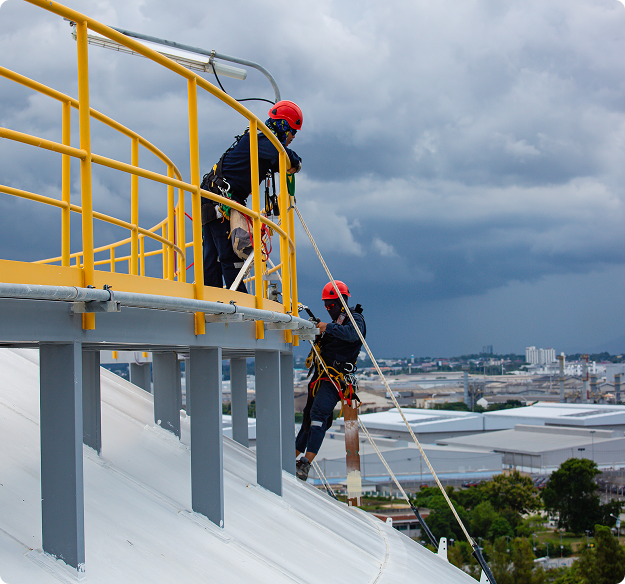
Signs of Storm Damage on a Commercial Roof
Storm damage isn’t always obvious from ground level. A few signs are worth checking for after any significant wind or rain event:
- Water stains on interior ceilings or walls, which often appear after the storm has already passed
- Visible membrane lifting, displacement, or punctures across the roof surface
- Gravel or tile debris on the roof itself or scattered around the building perimeter
- Pooling water that hasn't drained within 48 hours after rainfall
- Damaged or missing flashing at perimeter edges, penetrations, or equipment curbs
Any one of these on its own is worth a call. Several together usually mean the roof needs a full assessment before the next weather event compounds the damage.
Our Storm Damage Assessment Process
Our restoration process begins with a rapid post-storm inspection that covers both visible damage and the underlying membrane and flashing conditions that aren’t always apparent at first glance.
Licensed commercial roofing experts evaluate membrane integrity, check flashing connections, and inspect drainage systems for signs of compromise.
Moisture tracing is a core part of this process. Water entry points rarely align with where the damage first shows up inside the building. Therefore, we trace moisture paths through the roofing system to find the actual source rather than repairing wherever the ceiling stain happens to be.
We document every assessment with a written report and photographs, giving property managers a clear record of the roof’s condition for both internal planning and insurance purposes.
Where needed, we put temporary protection measures in place to stop ongoing water intrusion while a permanent repair plan gets finalized. This keeps a manageable problem from turning into a much larger one while decisions are still being made.

Roofing Systems We Restore After Storm Damage
We restore a wide range of commercial roofing systems throughout Orange County:
- Single-ply membranes (TPO, PVC, EPDM): We repair punctures, reseal seams, and reinforce areas affected by wind uplift.
- Modified bitumen systems: Storm damage may lead to surface splits or membrane displacement. We apply layered repair methods to restore system integrity.
- Built-up roofing (BUR): We address membrane breakdown, reinforce weak sections, and restore protective surfacing.
- Clay and concrete tile systems: Impact from debris can crack or displace tiles. We replace damaged tiles and repair underlayment to restore proper water flow.
- Shingle systems: Wind can loosen or remove shingles. We replace affected areas and secure surrounding sections.
- Roof coatings and restoration systems: Coatings exposed to heavy weather may degrade or wear unevenly. We repair and reapply protective layers as needed.
Insurance Documentation Support
Commercial storm damage claims often depend on detailed contractor documentation to move forward. We provide written damage assessments, photographic evidence, and scope-of-work descriptions that property managers can submit as part of their claim.
One thing worth clarifying up front: Maven Roofing Company does not prepare insurance estimates or work directly with insurance adjusters on a client’s behalf. Our role is to document the roof’s condition and the repair work needed. From there, it’s up to the property owner and their insurance provider to handle the claims process itself.

Ready to Restore Your Storm-Damaged Roof?
Storm damage can affect your building quickly, but early action can limit the impact and restore stability. Our Orange County team is ready to assess your roof, identify the extent of the damage, and provide a clear restoration plan.
Request a Storm Damage Assessment or call us directly at 562-233-2564.
FAQs
What types of storm damage are common on commercial roofs in Orange County?
Santa Ana wind events cause membrane uplift, displaced tiles, and debris punctures. Heavy rainfall exposes drainage weaknesses and creates standing water, while rapid temperature swings can stress and crack seams even without a major storm system present.
How quickly should storm damage on a commercial roof be repaired?
As soon as possible. Water that finds its way past a compromised membrane spreads into insulation and decking quickly, and delayed repair usually turns a contained issue into a larger, more expensive one.
Does storm damage always require a full commercial roof replacement?
No. Many storm-related issues, such as isolated punctures, displaced tiles, or lifted seams, can be addressed through targeted repair. Widespread damage across a large portion of the roof may point toward replacement instead.
Can Maven Roofing provide documentation for a commercial roof insurance claim?
Yes. We provide written damage assessments, photographs, and scope-of-work descriptions. We do not prepare insurance estimates or communicate directly with adjusters on your behalf.
What is a temporary roof protection measure and when is it used?
Temporary protection covers exposed or damaged areas of the roof to limit further water intrusion while a permanent repair plan is finalized. It’s typically used right after an assessment, before full restoration work begins.
How do I know if my commercial roof has hidden storm damage?
Water stains after a storm, pooling water that doesn’t drain within 48 hours, and debris on the roof or around the building are all signs worth investigating. A full inspection is the only way to confirm the extent of any hidden damage.