
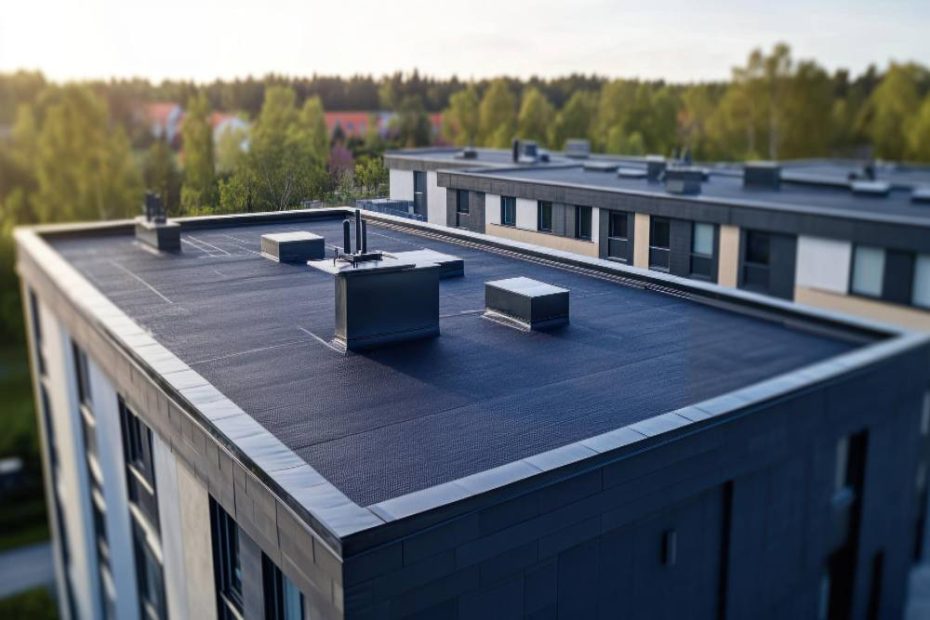
Flat roofing systems have evolved far beyond simple coverings. Modern commercial flat roofing serves multiple functions: protecting building contents from water infiltration, optimizing energy performance, and providing long-term durability under varying weather conditions. For property managers, business owners, and facility decision-makers, understanding the types of commercial flat roof systems and their installation methods is vital to making informed choices.
This guide explores key commercial flat roofing materials, attachment methods, and maintenance considerations while emphasizing solutions offered by Specialty Maven Roof Systems.
Understanding Commercial Flat Roofing Systems
Commercial flat roofing systems are designed for low-slope applications, typically ranging from ¼:12 to 3:12 roof pitch. These systems are commonly found on warehouses, factories, retail centers, apartment complexes, and institutional buildings. Their design allows efficient drainage and the installation of insulation layers while minimizing construction costs.
Modern materials offer flexibility, durability, and energy efficiency. Selecting the right system is a key part of professional roofing services and depends on the building’s purpose, environmental exposure, and long-term performance goals.
Asphalt-Based Roof Systems
Asphalt remains a long-standing choice for commercial flat roofing. There are several varieties, including Built-Up Roofing (BUR), Modified Bitumen (Mod Bit), and hybrid systems combining both. BUR consists of multiple layers of asphalt and reinforcing felts, creating a durable, watertight membrane capable of withstanding thermal expansion, punctures, and heavy foot traffic. Its layered construction provides redundancy: if one layer fails, remaining layers continue to protect the building.
Modified Bitumen systems enhance asphalt with polymers, improving flexibility and resistance to temperature fluctuations. They can be applied using hot mopping, torch welding, or self-adhering methods. Hybrid systems combine the robustness of BUR with the flexibility of Mod Bit membranes, offering tailored solutions for demanding projects.
Single-Ply Membrane Systems
Single-ply membranes have grown significantly over the last four decades. These systems consist of factory-fabricated sheets of synthetic materials installed as a continuous membrane. Single-ply options include thermoset materials, primarily EPDM, and thermoplastics such as TPO and PVC. EPDM is a durable rubber-based material resistant to ultraviolet light, ozone, and common chemical exposures. Thermoplastic membranes are heat-fused or solvent-welded to create a seamless, watertight surface.
Attachment methods for single-ply systems vary. Fully adhered membranes use adhesives to bond directly to the roof deck. Mechanically attached membranes rely on fasteners for secure installation, often suitable for high-wind zones. Ballasted systems use rock or other weights to hold the membrane in place and are ideal for structurally sound decks capable of supporting the additional load.
Metal Roofing for Low-Slope Applications
Metal is one of the oldest commercial roofing materials, but remains relevant for low-slope installations. Contemporary systems use materials such as galvanized steel, aluminum, copper, or zinc, commonly configured as standing seam panels. Standing seam designs interlock along vertical seams, providing effective water drainage and reducing leak risks. Metal roofs are highly durable, fire-resistant, and capable of withstanding extreme weather conditions.
For retrofit projects, metal roofs can be combined with a sub-framing system to introduce minimal slope, allowing proper drainage. Additional coatings, including acrylic elastomers, can enhance UV protection, waterproofing, and corrosion resistance. While initial costs for metal roofing are higher than some alternatives, longevity and minimal maintenance can justify the investment for commercial flat roof applications.
Liquid-Applied and Spray Foam Roofing Systems
Liquid-applied membranes and spray foam systems are specialized low-slope solutions suitable for unique building geometries. Liquid-applied membranes include polymer-modified asphalt or urethane coatings that form seamless, elastic surfaces. Spray foam roofing offers thermal insulation and waterproofing simultaneously but requires precise substrate preparation.
These systems excel in covering contoured surfaces, penetrations, and complex roof structures. Regular inspections are necessary to maintain performance and prevent breaches in elasticity or coverage.
Vegetative or Green Roofs
Vegetative roofing is increasingly applied to commercial flat roofs, particularly for urban environments aiming for stormwater management, improved insulation, and environmental sustainability. These systems require a durable underlying membrane to maintain waterproofing integrity.
Plants are typically installed in modular trays or extensive layers with drainage components. While initial costs may be higher, green roofs can extend membrane life, reduce energy costs, and contribute to environmental certification goals.
Insulation and Vapor Retarders
Insulation is a fundamental component of commercial flat roofing. Rigid or semi-rigid boards made from polyisocyanurate, extruded polystyrene, or fiberglass reduce heat transfer and improve energy efficiency. Proper insulation placement, either above or below the membrane, enhances thermal performance while minimizing building energy costs.
Vapor retarders or barriers are often installed to prevent moisture intrusion into the insulation layer, which could compromise thermal resistance and damage the roof assembly. Selecting the appropriate insulation and vapor retarder combination is crucial to achieving a long-lasting, high-performance commercial flat roof.
Maintenance and Repair Considerations
Regular inspections and maintenance are key to prolonging the service life of a commercial flat roof. Annual inspections, supplemented by evaluations after severe weather events, help identify potential leaks, membrane deterioration, or mechanical damage. Timely repairs following professional assessments can prevent costly replacements and preserve warranty coverage.
A licensed roofing contractor can evaluate whether repairs suffice or if full roof replacement is necessary. Factors such as roof age, building use, climate exposure, and code requirements influence this decision. Maintenance practices vary by system type, with single-ply membranes generally requiring less frequent intervention than asphalt-based or vegetative systems.
Warranties and Long-Term Protection
Most commercial flat roofing systems come with manufacturer warranties covering material defects, often ranging from 10 to 20 years. Additionally, roofing contractors may offer workmanship warranties covering installation quality and related issues. These warranties vary by system type and project scope, and it is important to understand coverage details, including exclusions and conditions that could void protection.
Professional commercial flat roofing contractors typically provide detailed warranty documentation upon project completion, offering peace of mind and clear accountability. Combining manufacturer and workmanship warranties delivers comprehensive coverage for both materials and installation quality.
Maven Roofing Company’s Commercial Roofing Services
Maven Roofing Company delivers comprehensive roofing services for commercial and industrial buildings, specializing in flat and low-slope systems. Our team offers expertise in asphalt-based systems, single-ply membranes, metal roofing, and specialty coatings. We work with property owners and facility managers to evaluate building requirements, recommend appropriate systems, and perform precise installation.
Our family-owned business emphasizes quality, reliability, and professional service. We provide optional workmanship warranties, work with high-grade materials, and maintain licensed, bonded, and insured operations.
For more information or a project estimate, contact us to discuss your commercial flat roofing needs with our expert team.